Constructing on Water
A railway track requires extreme precision. Steel rails expand and contract with temperature changes, and the subgrade beneath them must remain absolutely stable to prevent derailments. Doing this on solid ground is hard enough. Doing it suspended over a churning sea is a monumental feat of engineering.
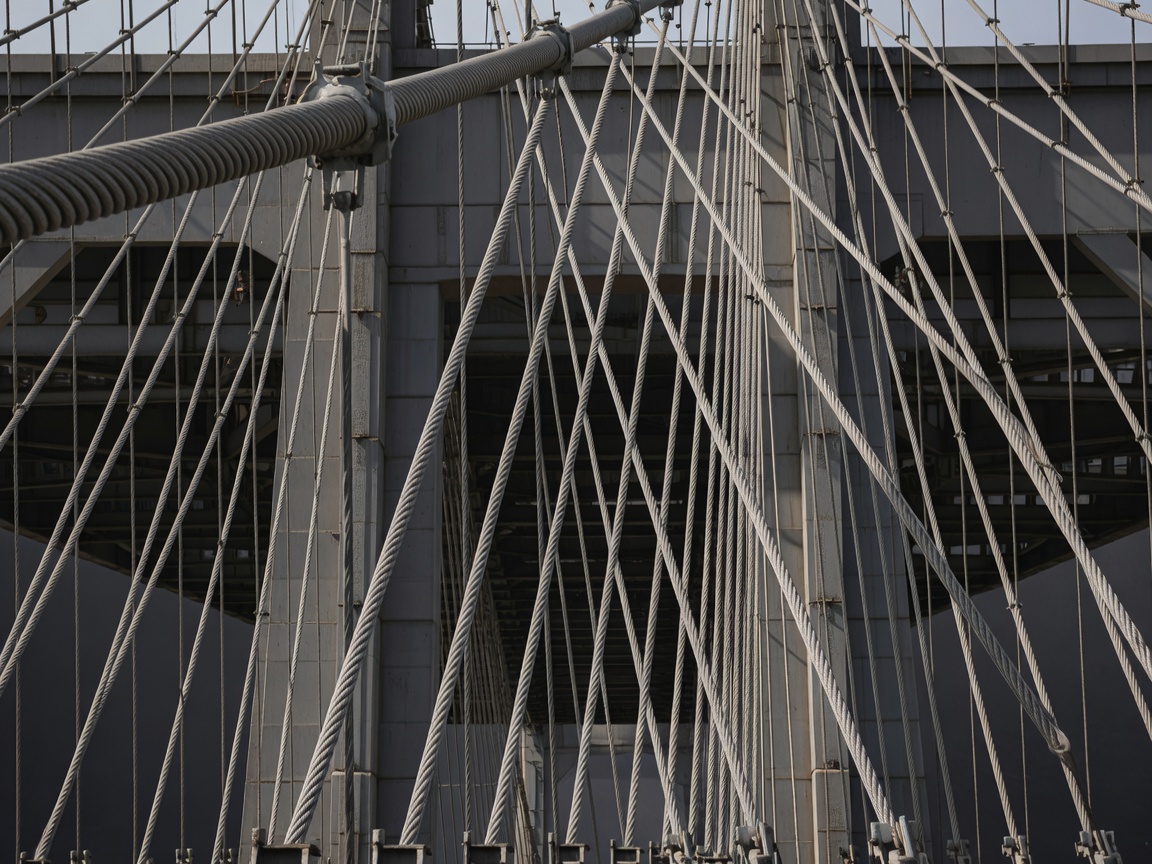
The Enemy: Saltwater and Wind
The primary antagonist for any sea railway is corrosion. The saline environment rapidly attacks bare steel and degrading concrete. To combat this, modern sea bridges utilize cathodic protection systems, specialized anti-corrosive epoxies, and stainless-steel rebar. For tracks, continuous welding reduces the number of joints where water can pool, and heavy-duty galvanized fastenings hold the rails to the sleepers.
Wind is the secondary threat. High-profile passenger trains act like sails. If crosswinds exceed safe thresholds (often around 90-100 km/h depending on the rail system), traffic must be halted. Anemometers are installed along the length of sea bridges like the Øresund Link, automatically signaling centralized control systems to enforce speed restrictions or stop traffic entirely when storms approach.
Foundation Scour
For bridges planted directly in the seabed, "scour" is a massive concern. Tidal currents constantly wash sediment away from the base of the piers. Over decades, this can undermine the foundation. Engineers counter scour by dumping massive concrete tetrapods or large boulders around the base of the piers to absorb and redirect the kinetic energy of the water.
| Threat | Engineering Mitigation |
|---|---|
| Salt Corrosion | Cathodic protection, specialized coatings, stainless steel |
| Crosswinds | Real-time anemometer arrays, aerodynamic train profiles |
| Foundation Scour | Tetrapod barricades, deep pile driving into bedrock |
| Thermal Expansion | Continuous welded rail with specialized expansion joints |